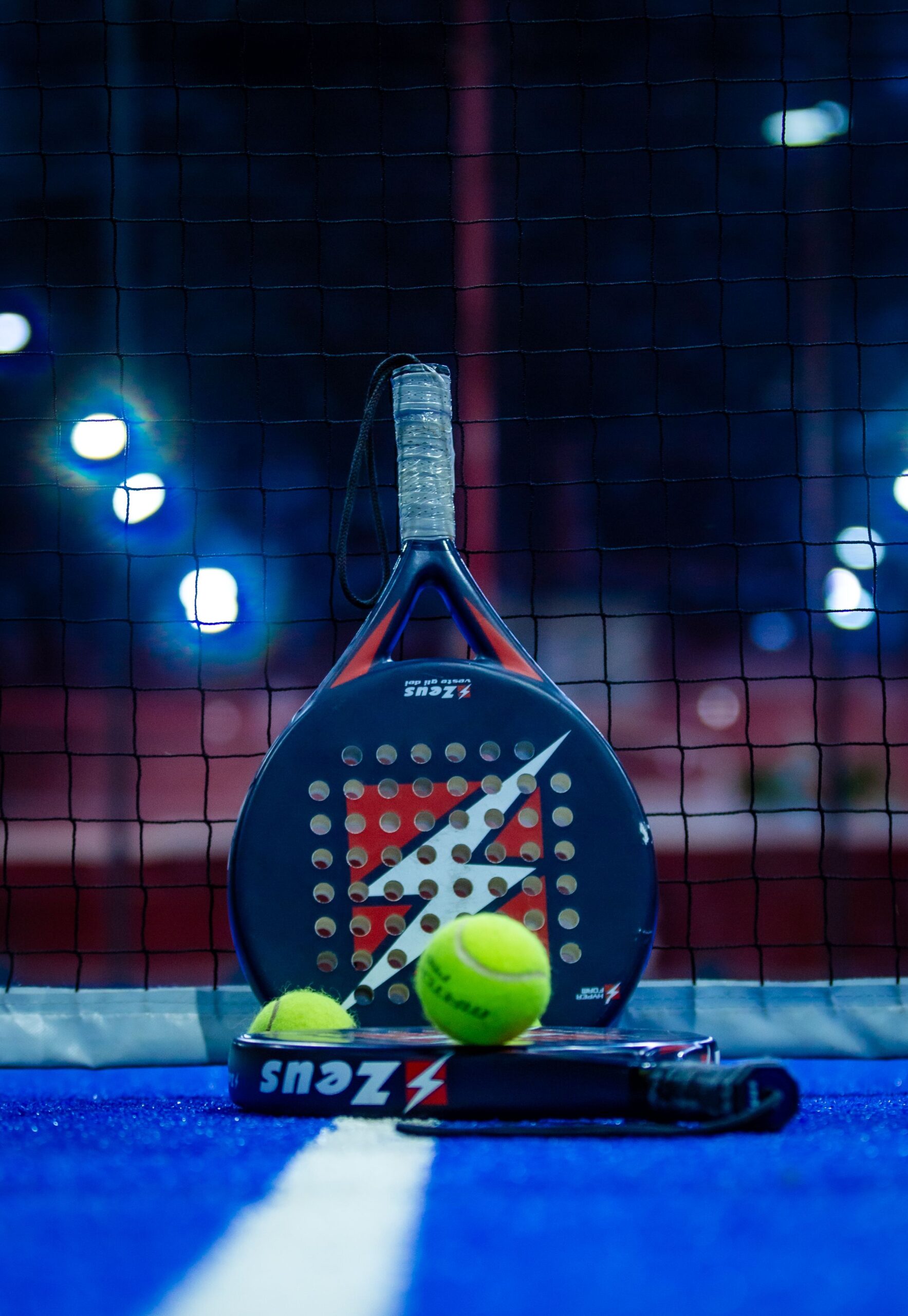

Let me say it again, padel. Padel can be a career choice. Now I know that sounds like a stretch, but stick with me for a second. I recently went down a rabbit hole reading about a couple who quit their office jobs to open a padel facility outside their city, and honestly, by the end of the article I had eleven tabs open comparing court construction costs. But before we get into the business side, let’s talk about the sport itself, because I don’t think enough people actually know what it is.
Padel is this hybrid of tennis and squash, played in doubles on a court about a third the size of a tennis court, enclosed by glass and mesh walls that you’re actually allowed to use during play. The ball can bounce off the walls, which sounds chaotic until you watch a rally and realize it’s less chaos and more choreography. It originated in Mexico in the late 1960s and exploded in Spain and Argentina, and it’s only really started catching on here in the last few years. I tried it for the first time at a friend’s birthday outing and completely embarrassed myself, mostly because I kept forgetting the walls were part of the game and not an obstacle to avoid.
That embarrassment turned into a mild obsession, which turned into me looking up what it would actually take to open a padel club. Turns out, quite a lot. You need land, or a warehouse big enough to convert, and the courts themselves aren’t cheap, somewhere in the range of thirty to fifty thousand dollars each depending on the enclosure and surface. Then there’s lighting, because a huge chunk of padel happens in the evenings when people get off work. And then there’s the part nobody warns you about until you’re in it: the scheduling. Once you have more than a couple courts and a membership base, you cannot run reservations off a shared spreadsheet and a group chat. This is where padel booking software actually earns its keep, handling member logins, court availability, peak-hour pricing, and cancellations without you having to personally field forty texts a night asking if Court 2 is free at seven.
What strikes me most about the people who’ve actually done this, the ones who left stable jobs to bet on a sport most of their friends had never heard of, is that almost none of them talk about the money first. They talk about mindset. About how the biggest shift wasn’t learning construction permits or supplier contracts, it was rewiring the voice in their head that kept saying this was reckless. That kind of change doesn’t happen by accident. It comes from small daily wins, from noticing what’s going right instead of cataloguing what could go wrong, from treating self-talk like something you can actually train instead of something you just have to live with.
I still don’t own a padel court. I own a padel racquet I’m mediocre with and a genuine curiosity about whether this is a business or just a very expensive hobby I haven’t committed to yet. But if you’re the type who gets a little obsessed with something new, know that plenty of people have taken that same obsession and built a business out of it. Sometimes entrepreneurship really does start with getting embarrassingly bad at a sport in someone’s backyard.
Leave a Reply